Following another year of learning, exchange, and connection in Turin, the Boulder Institute is preparing for MFT 2027.
A two-week, in-person program for senior financial inclusion leaders to examine how AI, data, and digital tools can strengthen, not replace, human relationships with clients.
Registration for MFT 2027 is now open.
For professionals working at the intersection of digital
transformation, risk, inclusion, and client-centered finance.
July 2027
ITC/ILO, Turin, Italy
English, French
Financial inclusion leaders from around the world
The Boulder Institute has built a global alumni community of professionals from leading financial inclusion organizations in dozens of countries. Our programs bring together participants from financial institutions, support organizations, networks, regulators, government agencies, and other organizations working in financial inclusion to share evidence-based knowledge and explore innovative approaches to serving low-income populations.
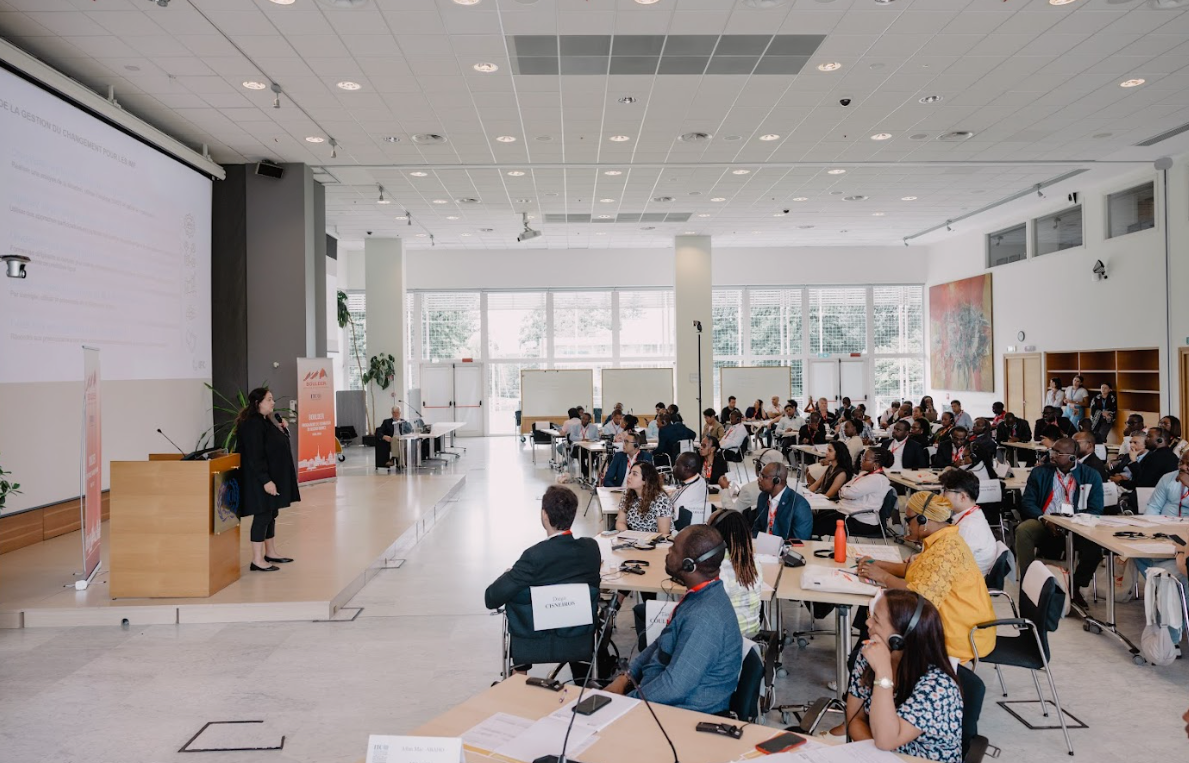
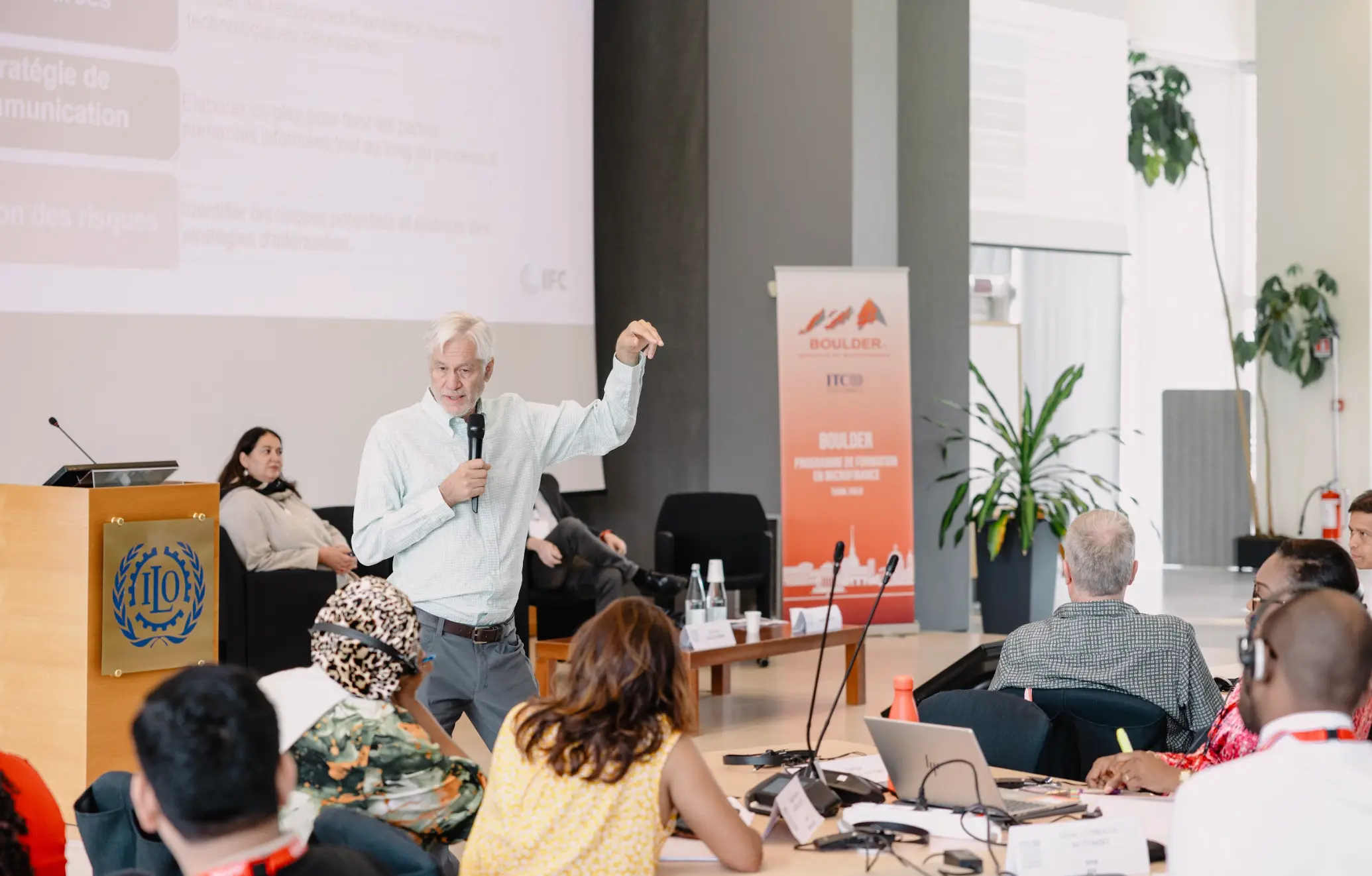
In July 2026, financial inclusion professionals gathered in Turin, Italy, for two intensive weeks of learning, exchange, and collaboration at the International Training Centre of the ILO. MFT 2026 explored how AI, data, digital tools, and human-centered approaches could strengthen — rather than replace — relationships with clients.
Browse the full list of courses, faculty, and weekly schedule for each program.
The Boulder Microfinance Training is designed for experienced professionals working in financial inclusion who are responsible for strategy, decision-making, and institutional direction.
Hold a senior or decision-making role (CEO, COO, department head, program director, senior manager).
Are responsible for client strategy, risk management, digital transformation, or product design.
Work in or with financial institutions, networks, support organizations, regulators, government agencies, or development organizations focused on financial inclusion.
Face real operational trade-offs related to digitalization, client protection, or inclusion at scale.
Value peer learning with practitioners from diverse countries and contexts.
Are looking to reflect and strengthen decision-making, not acquire entry-level training.
Walk away with practical frameworks, fresh perspectives, and the confidence to lead your institution through change, grounded in real-world experience and peer exchange.
Learn how digital tools, data, and AI can reveal what clients truly need, and how to use these insights to build stronger, more meaningful relationships.
Apply practical frameworks for managing institutional risk related to climate, crisis, and market volatility, and build the confidence to act decisively under uncertainty.
Reimagine how your institution designs financial products, using human-centered approaches that reflect how clients actually live, earn, and manage risk.
Turn data into a strategic asset. Learn to interpret analytics, leverage AI responsibly, and use evidence to guide decisions that drive real impact.
Move beyond good intentions. Gain practical strategies to expand access for women, rural communities, and underserved segments, with a focus on meaningful and measurable impact.
Turn learning into action with practical tools for navigating institutional change, while drawing on the exchange and connections built with financial inclusion professionals from around the world.
The Boulder Microfinance Training is a two-week, in-person learning experience designed to balance structured learning, peer exchange, and practical reflection.
Each day begins with a Morning Master Class, bringing participants from the English and French programs together. Led by experienced faculty and practitioners, these sessions explore cross-cutting themes and create a shared space for reflection and exchange.
Participants build their own learning path by selecting the courses that best match their responsibilities, professional context, and institutional priorities.
– 8 elective courses over two weeks, with morning and afternoon sessions
. Two distinct programs, one in English and one in French
Peer exchange is an essential part of the MFT experience. Participants share their experiences, discuss the challenges facing their institutions, and explore approaches being used in other contexts.
The program takes place on the ITCILO campus in Turin, creating an environment that encourages exchange beyond the classroom and allows participants to build connections throughout the two weeks.
Boulder courses combine participant choice with applied discussion and field-based learning, rather than following a fixed, linear curriculum.
Each participant takes four major electives from Monday through Thursday, followed by four minor electives on Friday. Minor electives offer a condensed introduction to courses participants did not take during the week, allowing them to explore additional topics while going deeper in the areas most relevant to their work.
Course Design
01
Courses are grounded in real-world situations and field experience. Participants are encouraged to analyze practical challenges, share their experiences, and explore solutions they can adapt to their own professional contexts.
02
Boulder faculty bring direct experience from the field, including current and former executives, advisors, researchers, and regional specialists. Sessions emphasize applied learning, discussion, and exchange grounded in real-world experience.
03
Courses are designed to encourage dialogue between participants and faculty. Questions, shared experiences, and discussion of real-world situations are an integral part of the learning process.
Explore key themes shaping financial inclusion today, from AI and digital transformation to client-centered product design, resilience, climate risk, and inclusive finance.
How digital tools and AI can strengthen, rather than distance, relationships with clients.
Using data and AI responsibly to better understand clients and support informed decision-making.
Designing financial products that reflect how clients actually live, earn, and manage risk.
Anticipating risk and strengthening institutions’ ability to navigate uncertainty and crises.
Understanding rural realities and adapting financial services to the specific needs of agricultural communities and markets.
Identifying the barriers women face and advancing more equitable access to financial services.
Understanding climate impacts on clients and institutions, and integrating climate risk into decision-making.
Strengthening governance and decision-making to support institutions through long-term change.
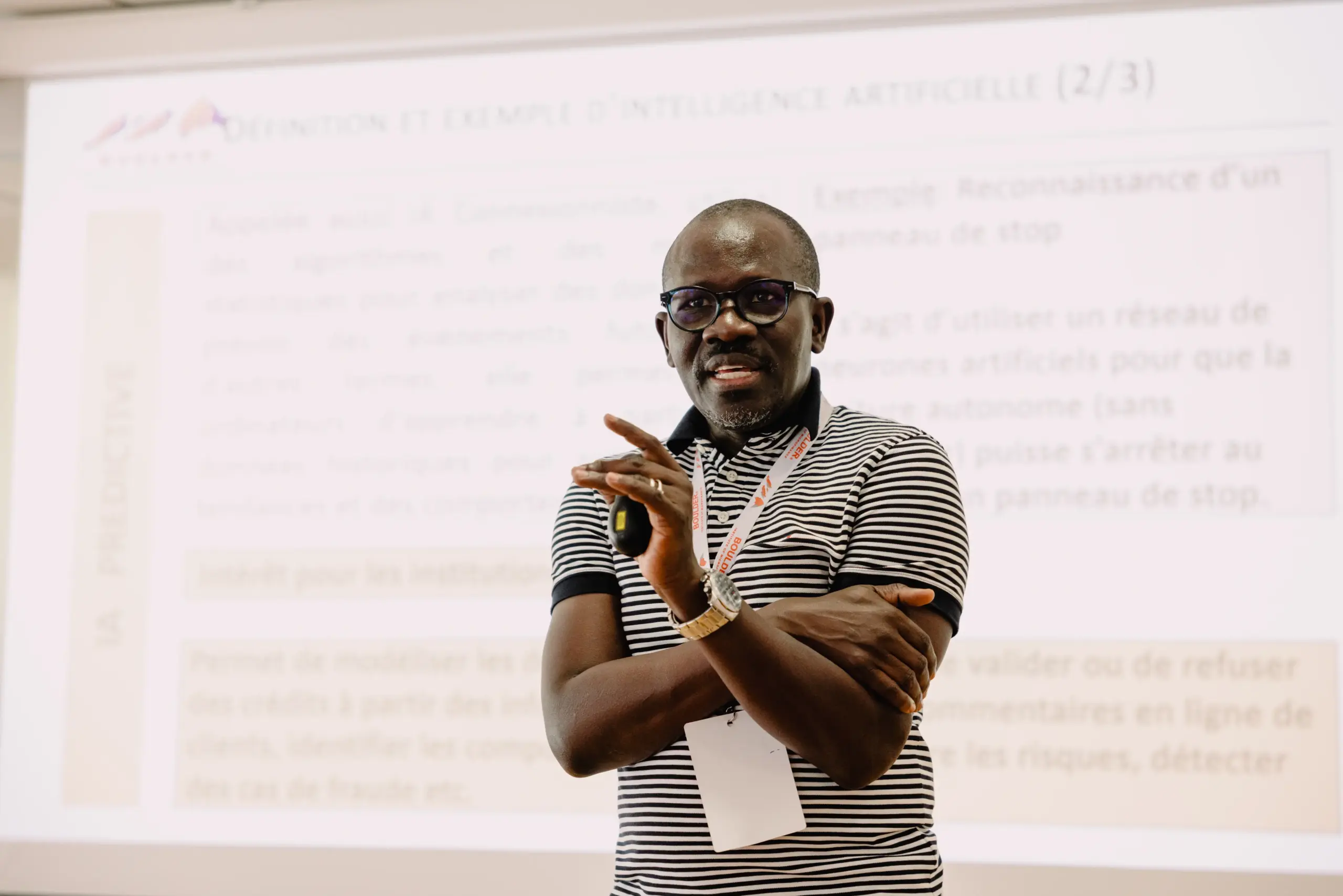
Boulder faculty are selected for their direct experience in the field. They include current and former executives, advisors to financial institutions and regulators, researchers closely connected to implementation, and specialists working across regions and income segments.
What distinguishes Boulder courses:
– Case-based discussions drawn from real organizations
– Discussion focused on real institutional challenges
– Facilitated peer learning among senior practitioners
– Practical frameworks adaptable after the program
Faculty frame key issues, guide discussion, and surface lessons from real-world practice.
For more than three decades, the Boulder Institute has been at the forefront of professional training in inclusive finance. Since 1995, we have equipped more than 8,500 professionals worldwide through our programs in Microfinance, Digital Transformation, Rural and Agricultural Finance, and Executive Leadership.
Our programs bring together participants from microfinance institutions (MFIs), support organizations, and government agencies to engage with evidence-based content and innovative approaches to serving lower-income markets.
Recognized globally for its longstanding role in microfinance training, the Boulder Institute has built an exceptional network of expert faculty who contribute to the evolution of financial inclusion.
Beyond the classroom, Boulder creates the conditions for a transformative experience, where exchange, reflection, and diverse perspectives encourage participants to look at their practices and the challenges facing the sector in new ways, helping organizations adapt and lead in evolving markets. The professional connections built in Turin extend well beyond the program.
The Boulder Institute is a U.S.-based licensed non-profit (501(c)) organization.
A two-week in-person program where senior financial inclusion leaders examine how AI, data, and design tools can strengthen, not replace, human relationships with clients.
Dates: July 2027
Duration: Two weeks, in-person
Location: ITC/ILO, Turin, Italy
Two distinct programs are offered, one in English and one in French.
– Tuition for all courses and Morning Master Classes
– Program materials and learning resources
– Daily coffee breaks
– Inauguration and closing gala dinners
– Selected activities organized as part of the program
– Travel to and from Turin
– Accommodation and meals on campus (available separately as a package through ITC/ILO)
– Visa and related travel costs
– Optional excursions and social activities
Payment can be made by credit card or bank transfer. Institutional invoicing is also available for organizations.
The program is designed for senior and mid-senior professionals in inclusive finance, including executives, program directors, heads of risk, digital transformation leaders, product managers, rural and agricultural finance specialists, policymakers, and professionals from support organizations.
No. While microfinance remains at the heart of MFT, the program is designed more broadly for professionals working in financial inclusion, including those from financial institutions, networks, support organizations, regulators, government agencies, and development organizations. The program reflects the evolution of the sector while remaining deeply grounded in the realities of microfinance and inclusive finance.
This is a full-time, immersive two-week program. Daily sessions combine Morning Master Classes with elective courses, peer discussions, and informal exchanges. Participants should expect focused days with reflection and interaction opportunities beyond the classroom.
Each participant takes four major electives from Monday through Thursday, followed by four minor electives on Friday. Minor electives provide a condensed introduction to courses participants did not take during the week, allowing them to explore additional topics while going deeper in the areas most relevant to their work.
Morning Master Classes bring participants from the English and French programs together for sessions led by senior faculty on cross-cutting themes such as leadership, strategic adaptation, client focus, risk, digital transformation, and change management.
Some courses include light individual or group exercises designed to deepen understanding. These are intended to be practical and manageable within the program schedule.
MFT is offered through separate English and French programs, each with its own courses and faculty. Participants select their preferred program when registering. Morning Master Classes bring participants from both programs together.
Interpretation is provided during Morning Master Classes and for selected courses open to participants from both programs.
Most participants stay on campus at ITC/ILO, which facilitates informal exchange, shared meals, and connections outside the classroom. Accommodation, meal options, rates, and booking information are provided separately.
ITC/ILO handles visa support after formal registration and payment of the program fee. The invitation letter is generally provided a few weeks before the program starts. For visa-related questions, please contact boulder@itcilo.org
Schedule your embassy or consulate appointment as early as possible, as obtaining an appointment in some countries can take several months.
Registration begins with the form on the Boulder website. The Boulder team will follow up with next steps, after which participants complete their formal registration through the ITCILO website.
The 2027 tuition fee will be announced soon. For reference, the fee was €5,100 in 2026. The fee covers all courses and Morning Master Classes, program materials and learning resources, daily coffee breaks, inauguration and closing gala dinners, and selected activities organized as part of the program. Accommodation, meals, and travel are not included.
Beyond tuition, participants are responsible for travel to and from Turin, visa-related costs, accommodation, meals, personal expenses, and optional excursions and social activities. ITCILO offers a separate on-campus accommodation and meal package; 2027 rates will be announced soon.
Yes. Many organizations send multiple participants. ITCILO can issue institutional invoices and support organizational payment processes.
ITCILO provides details on cancellations, transfers, and refunds during formal registration.
Yes. Participants who complete the program receive a certificate of completion jointly issued by ITC/ILO and the Boulder Institute of Microfinance.
The MFT is a professional training program, not an academic degree program. For more than three decades, it has brought together microfinance and financial inclusion professionals from around the world.
Still have questions?
Start your registration today and join financial inclusion leaders from around the world in Turin this July.